Tracing the unexpected lineage between cultural expression and medical innovation, From Dance to Diagnosis highlights the latent potential of mobile technology in sub-Saharan Africa. The project originated as a web application utilising machine learning and pose estimation to track and rate the popular South African Vosho dance. Recognising the profound willingness of regional users to engage with mobile-first AI, the underlying algorithm was subsequently repurposed into an offline diagnostic prototype for Parkinson’s disease. By analysing torso rigidity, gait, and arm movement directly on the device without requiring internet access, the experiment brilliantly recontextualises vernacular choreography as a blueprint for accessible, life-saving healthcare technology in low-resource environments.
Background
In 2018, after conducting research, I realised the extent of the opportunities presented by small data in the development of AI-enabled solutions for the African continent. I noticed how mobile-first internet connectivity trends in the sub-Saharan region have readied a generation for more personal relationships with technology.
My task was to create a use case that effectively demonstrates African users’ readiness for emerging technology.
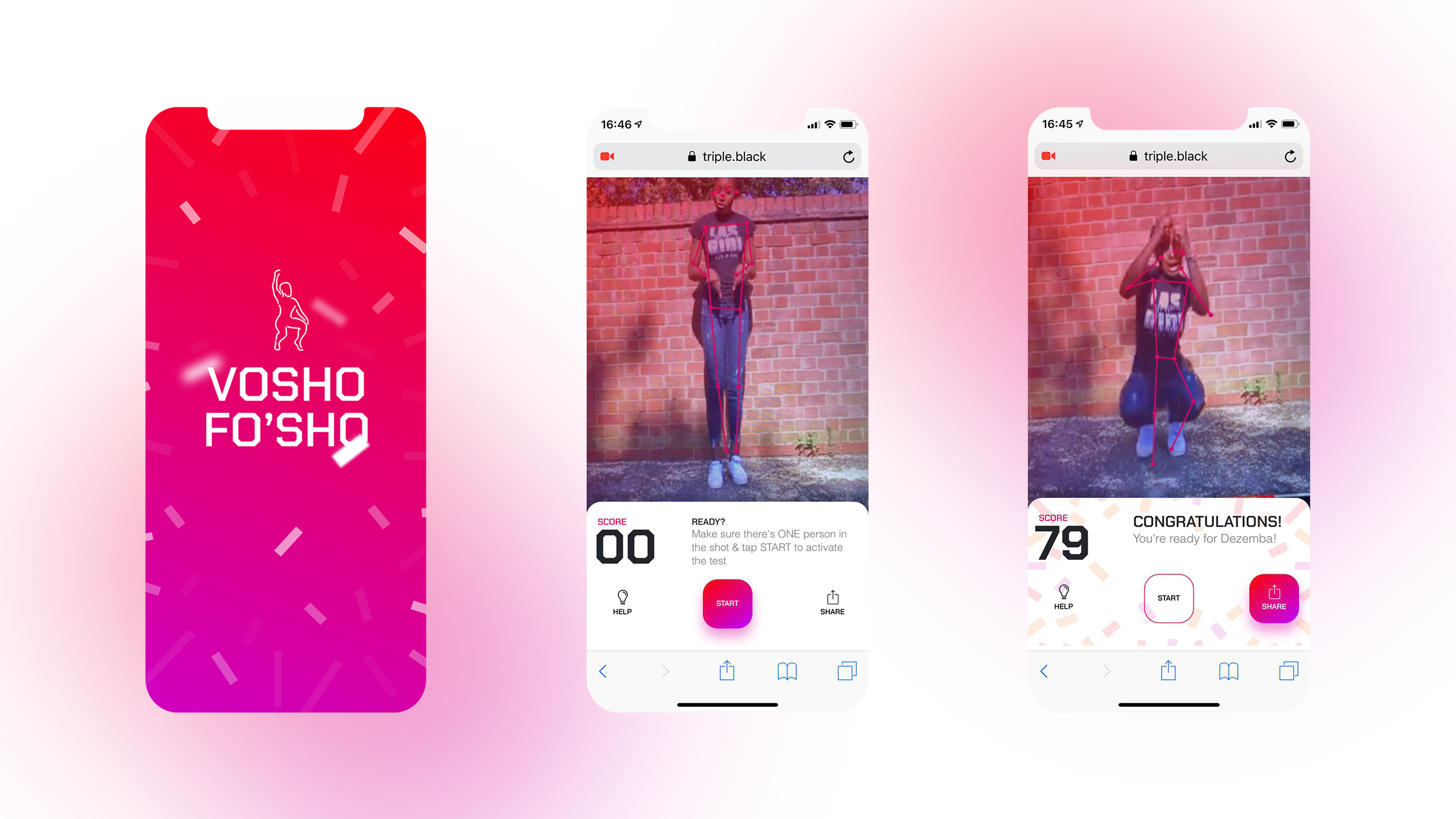
App Screens
The result was a dance app launched in South Africa. It was a web application that uses machine learning-powered pose estimation from Google’s Tensorflow library to parameterise and rate a very popular South African Gqom music dance known as iVosho.
The Vosho Fo’sho app was accessed on over 100 different devices over the course of 2 months.
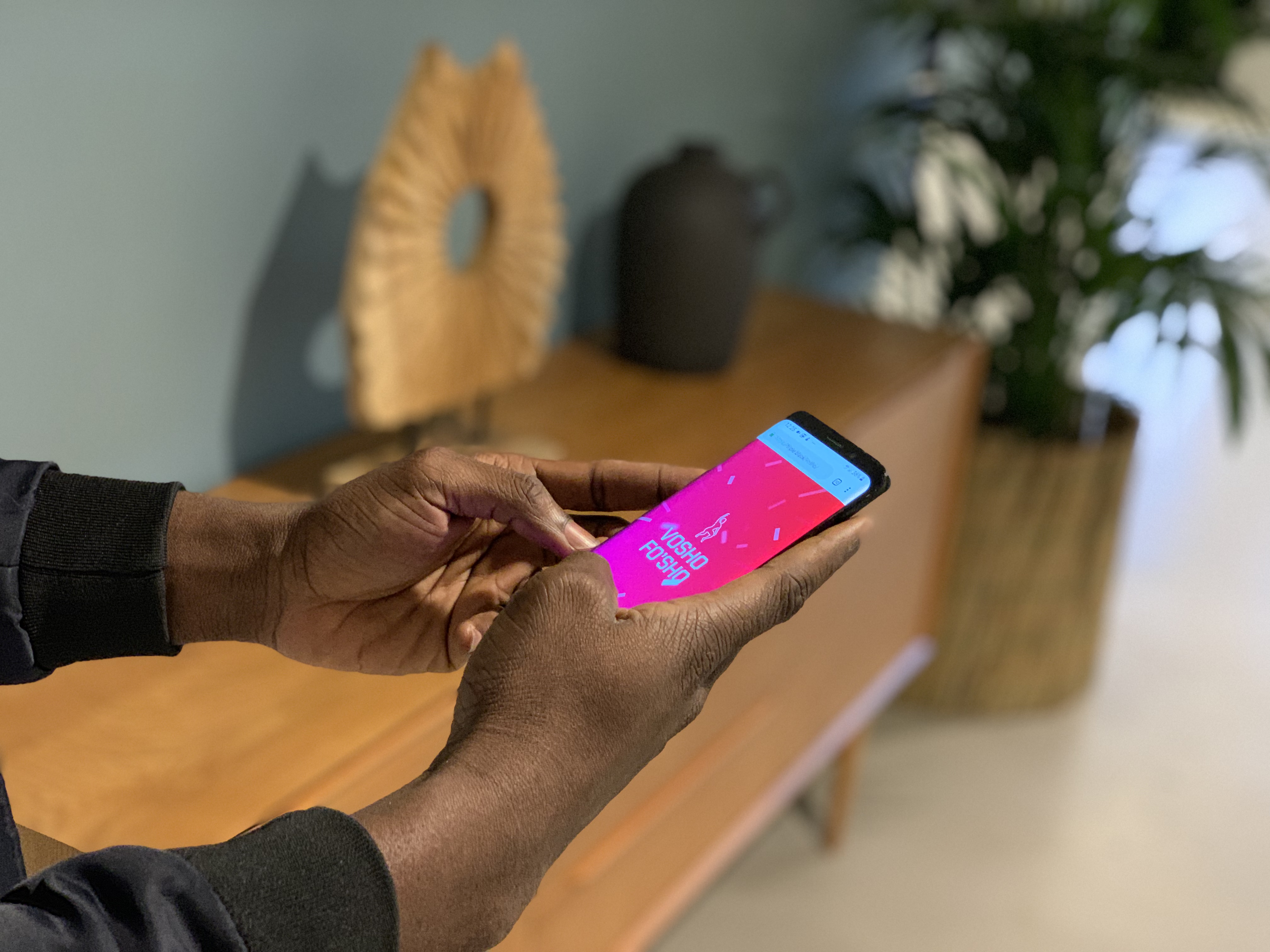
Vosho Dance App
After understanding South Africans’ willingness to interact with bleeding edge technology on a spectrum of device types, I decided to do more with the dance algorithm and have since repurposed it and built a prototype for the early diagnosis of Parkinson’s disease.
This prototype measures the relative position of a subject’s limbs as they walk, including the rigidity of the torso, their gait and arm movement and their posture and makes an assessment after 3 evaluations. This is all done on the device and does not require an internet connection to function.
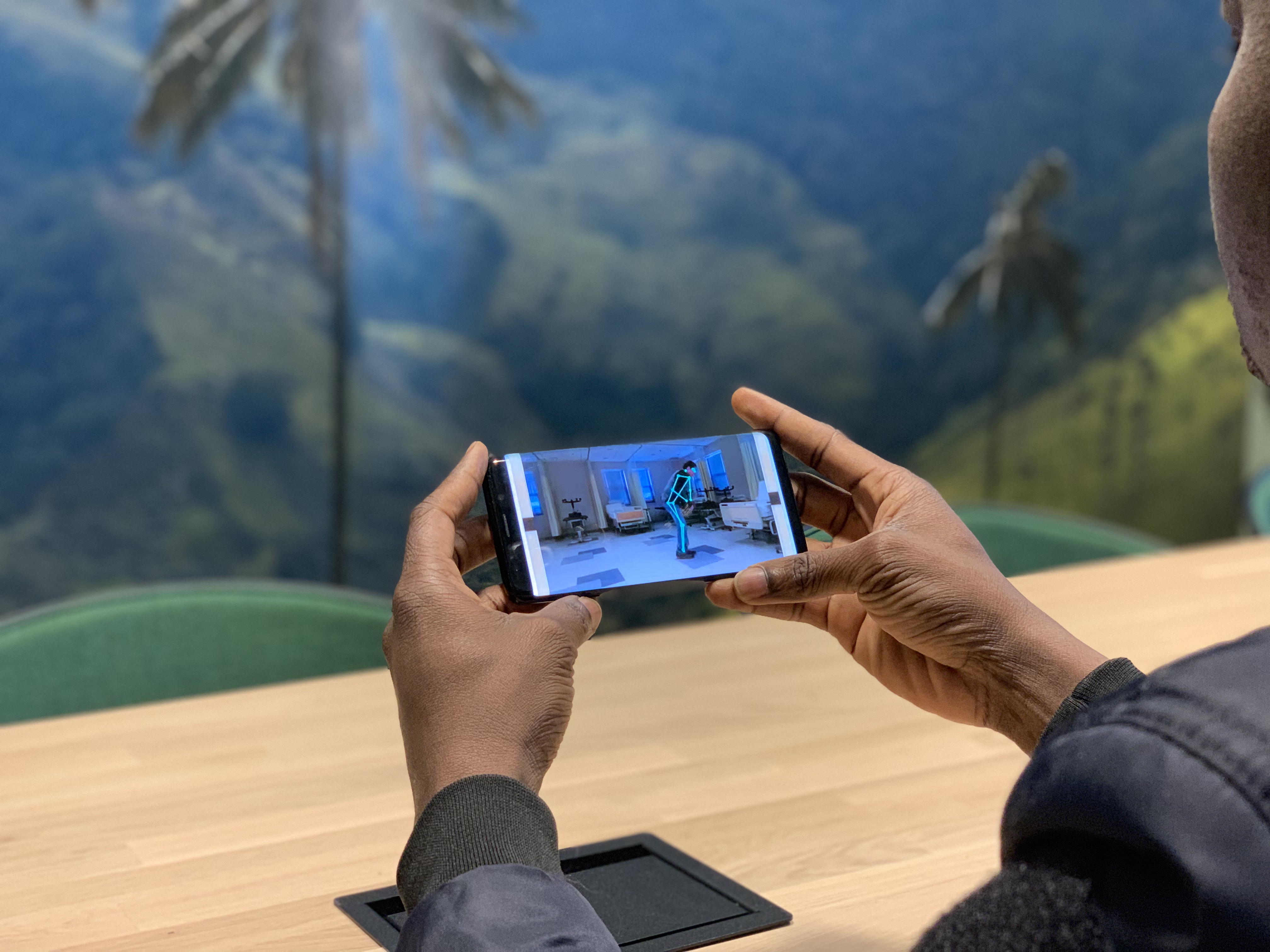
Parkinson’s Disease diagnosis app — early prototype
When properly harnessed, mobile phones present a new frontier for data-reliant innovation considering that over 85% of Africans own or have access to a cell-phone and our dance app experiment proved that there is a genuine willingness on the continent to interact with technology that is new as long as it is relevant.
Find it here: triple.black/vosho